
Understanding Parkinsons and Supporting those living with it.
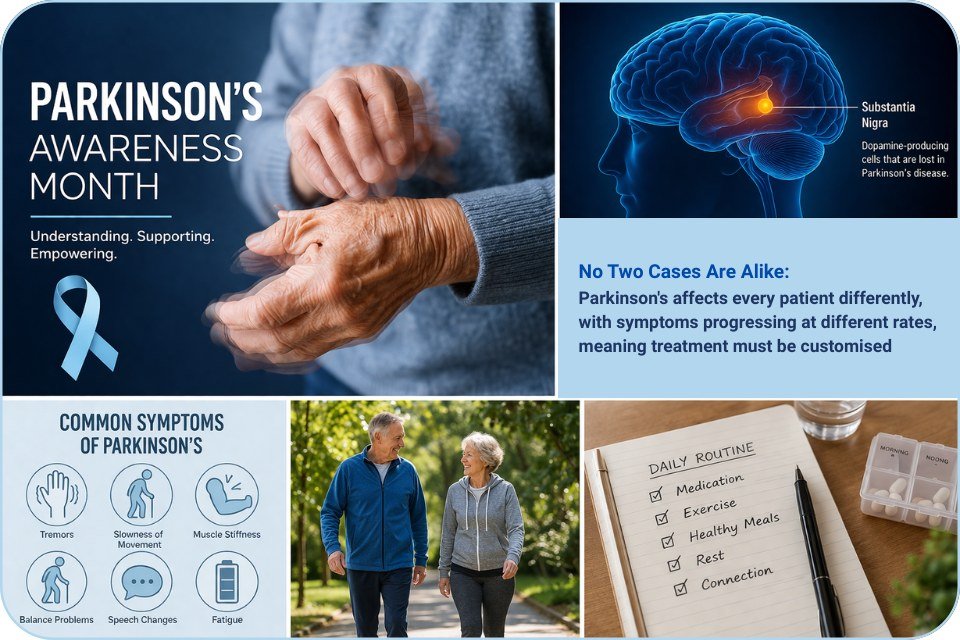
April marks Parkinson’s Awareness Month, a time dedicated to increasing understanding of a condition that affects over 150,000 Australians. Despite how common it is, Parkinson’s is still widely misunderstood, often reduced to the idea of “just shaking hands,” which barely scratches the surface.
What is Parkinson’s Disease?
Parkinson’s Disease is a progressive neurological condition that affects movement, caused by a loss of dopamine-producing cells in the brain. Dopamine plays a key role in coordinating movement, so when levels drop, the body struggles to respond the way it used to. It’s not just one neat, predictable set of symptoms either. Parkinson’s looks different for everyone, which makes it frustratingly difficult to diagnose early.
Common Symptoms
While tremors are the most recognisable symptom, Parkinson’s can involve a wide range of physical and non-physical changes:
Slowness of Movement (bradykinesia)
Muscle stifness and rigidity
Balance issues and increased risk of falls
Fatigue and sleep disturbances
Changes in speech and facial expression
Cognitive changes and mood disorders, including anxiety and depression.
Some of these symptoms appear years before a formal diagnosis, which is part of why people often dismiss early warning signs.
Living with Parkinson’s
There’s currently no cure, but treatments have come a long way. Medications can help manage symptoms by increasing or mimicking dopamine, and therapies like physiotherapy, occupational therapy, and speech therapy play a huge role in maintaining independence.
Daily life, though, can still become more challenging over time. Tasks that most people don’t think twice about, getting dressed, preparing meals, or even walking safely, can require extra time, effort, and support.
This is where in-home care becomes incredibly valuable. Having consistent, familiar support can make a real difference in maintaining both independence and quality of life.

The Importance of Support
Support for someone living with Parkinson’s isn’t just about physical assistance. It’s also about routine, emotional wellbeing, and staying connected.
Simple things matter more than people realise:
Keeping a regular daily routine
Encouraging safe movement and activity
Providing companionship and reducing isolation
Assisting with transport to appointments and social outings
For many families, there’s a balancing act between wanting to help and not wanting to take away independence. Professional support workers can step in to bridge that gap, offering practical help while respecting the person’s autonomy.
Why Awareness Matters
Awareness isn’t just about facts and statistics. It’s about understanding the lived experience of people with Parkinson’s and recognising that support needs evolve over time.
Earlier diagnosis, better access to care, and more informed communities all come from increased awareness. It also helps reduce the stigma that can come with visible symptoms, especially in public settings where people may not understand what they’re seeing.
How You Can Get Involved
Parkinson’s Awareness Month is a good reminder that small actions can have a meaningful impact:
Take time to learn about the condition
Support organisations like Fight Parkinson’s
Check in on friends, family or neighbours who may be affected
Help create more inclusive and understanding communities
Parkinson’s doesn’t define a person, but it does change the way they move through the world. With the right support, understanding, and care, people living with Parkinson’s can continue to lead meaningful, connected lives, even if things take a bit longer and require more patience than they used to.
And frankly, a bit more patience from everyone else wouldn’t hurt either.