
AusAlert: Australia’s New Emergency Warning System
When an emergency happens, every second counts. Whether it’s a bushfire, flood, cyclone or another serious threat, receiving timely information can make all the difference.
That’s why the Australian Government is introducing AusAlert, a new national emergency warning system designed to deliver faster, more reliable alerts directly to compatible mobile devices across Australia.
What is AusAlert?
AusAlert is Australia's next-generation emergency warning system. Instead of relying on traditional SMS messages, it uses cell broadcast technology to send alerts directly through mobile phone towers.
This means emergency warnings can be delivered almost instantly to compatible smartphones, tablets and smartwatches located within an affected area, regardless of which mobile provider you use. Unlike text messages, cell broadcasts are not affected by network congestion, making them far more reliable during large-scale emergencies when thousands of people are trying to use the mobile network at once.
When Will AusAlert Begin?
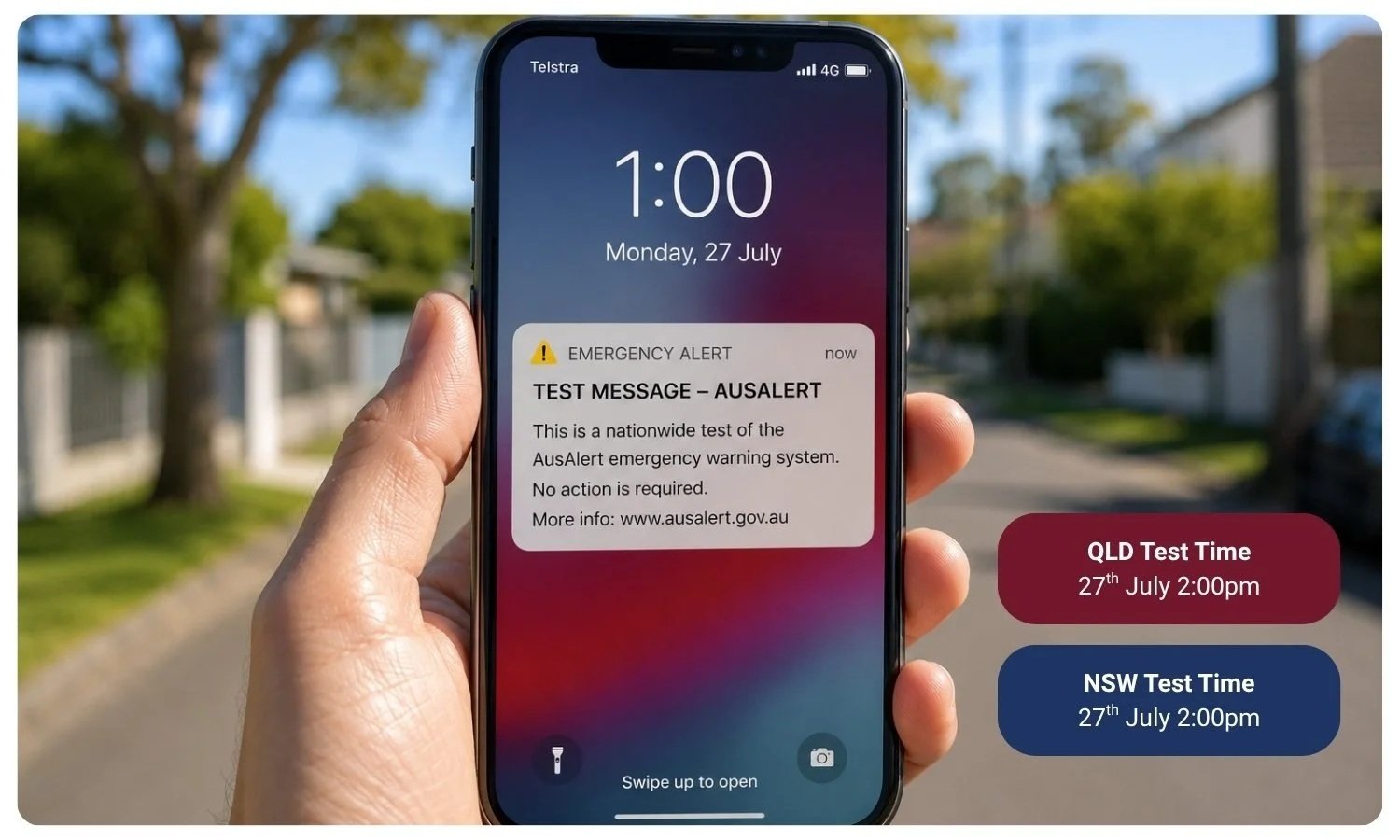
Before the system officially launches, a nationwide test will take place on Monday, 27 July 2026.
At the scheduled time, compatible mobile devices across Australia will display a clearly marked TEST MESSAGE accompanied by a loud siren-like sound lasting around 10 seconds. The alert will override silent mode and "Do Not Disturb" settings to ensure it gets your attention.
The system is expected to become fully operational across Australia from October 2026, following successful testing and final refinements.
How Will AusAlert Improve Safety?
AusAlert represents one of the biggest improvements to Australia's emergency warning capability in many years.
Some of its key benefits include:
Faster delivery of emergency information during bushfires, floods, cyclones, severe storms and other major incidents.
More accurate location targeting, allowing authorities to warn only the people who are genuinely at risk.
Greater reliability, as cell broadcast messages are not delayed by overloaded mobile networks.
No registration required, with compatible devices automatically receiving alerts when they are within an affected area.
Support for visitors and travellers, ensuring people passing through an area can still receive important warnings.
Why the Change
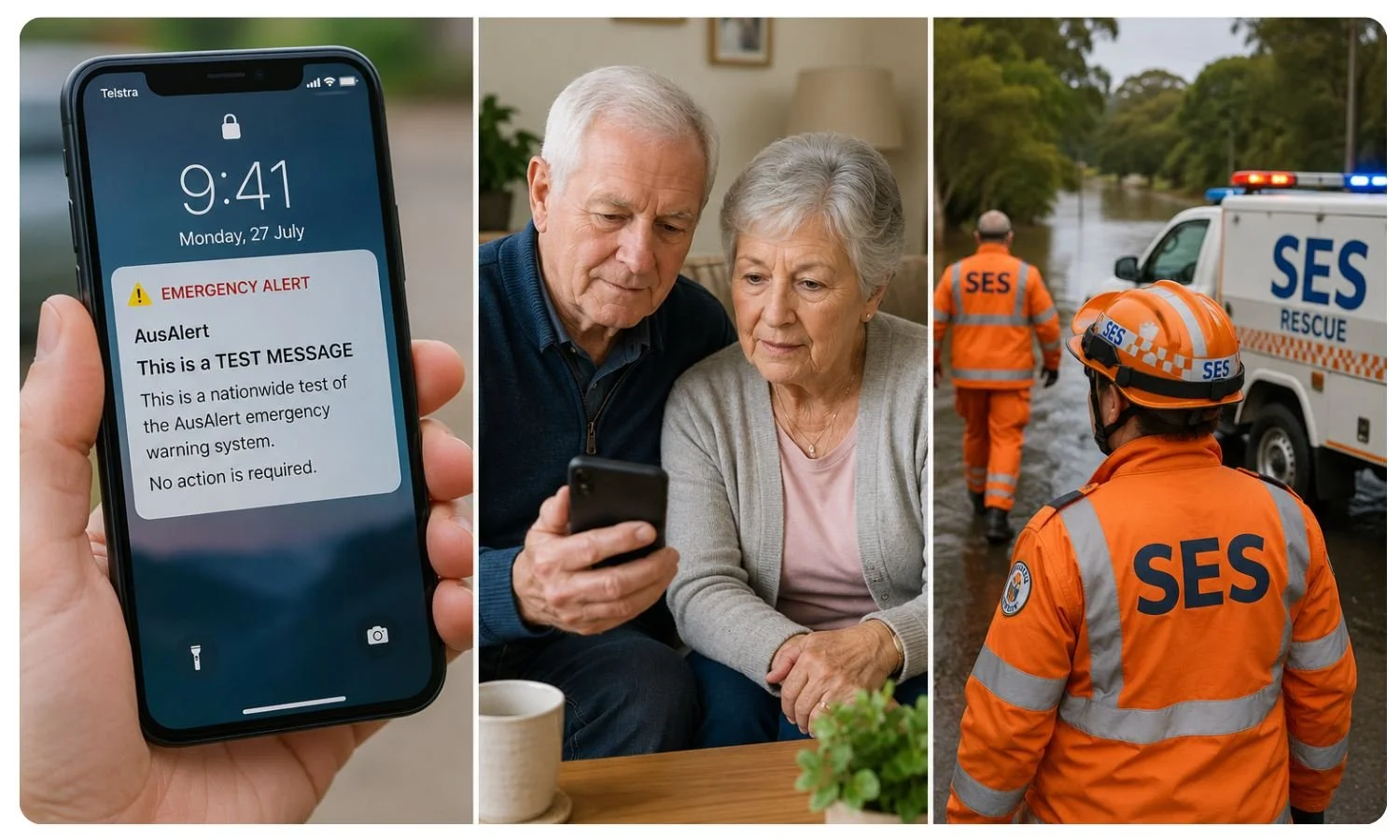
Australia's existing Emergency Alert system has served communities well for many years, but it relies heavily on SMS messaging and automated landline calls.
Following recommendations from the Royal Commission into National Natural Disaster Arrangements after the 2019-20 bushfires, governments recognised the need for a faster, more resilient warning system capable of reaching more people during rapidly developing emergencies.
AusAlert has been developed to address those recommendations by using modern technology that can notify large numbers of people simultaneously, even during periods of heavy network demand.
What Should You Do?
If you receive the nationwide test alert on 27 July, there's no need to be alarmed. The notification will clearly state that it is a test, and no action is required.
Once AusAlert officially launches later this year, however, any genuine alert should be taken seriously. Always read the message carefully and follow the instructions provided by emergency services.
Helping Australians Stay Safe
Natural disasters can develop quickly, and receiving accurate information at the right time can help people make safer decisions for themselves and their families.
AusAlert is designed to complement existing emergency information channels such as emergency service websites, local radio, television and official social media, providing another important layer of protection for communities across Australia.
As Australia heads into future bushfire, storm and flood seasons, AusAlert will help ensure that critical emergency information reaches people faster than ever before, when it matters most.
To learn more about AusAlert go to ausalert.gov.au