
Personal Care will be Fully Funded under Support at Home from October 1
An important change is coming to the Support at Home program that will make personal care more affordable for eligible older Australians.
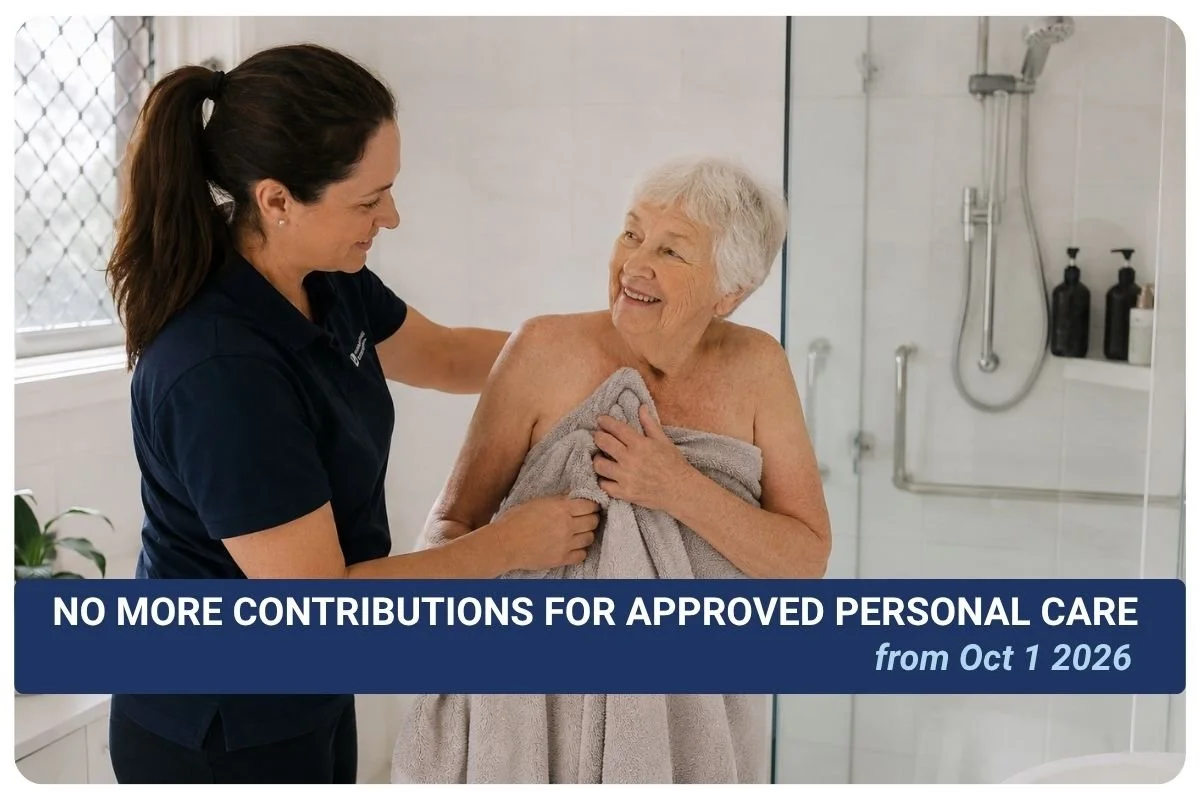
From the 1st of October 2026, the Australian Government will fully fund approved personal care services under Support at Home. This means eligible participants will no longer need to make an out-of-pocket contribution towards these services. The change is designed to ensure that older people can receive essential assistance with their daily personal care without cost becoming a barrier.
What is Changing?
Support at Home services are currently divided into three contribution categories:
Clinical Supports
Independence
Everyday Living
At present, personal care sits within the Independence category. Depending on their circumstances, participants may be required to contribute towards services in this category.
From 1st October 2026, personal care will move into the Clinical Supports contribution category. Services in this category are fully funded by the Australian Government, so participants do not pay a contribution.
This means you can receive personal care without an out-of-pocket contribution if
personal care is approved in your Support at Home plan; and
you have sufficient funding available in your Support at Home budget.
It is important to understand that personal care will still be paid from your available Support at Home budget. The change removes the participant contribution, but it does not provide a separate or unlimited amount of funding.
What services are considered Personal Care?
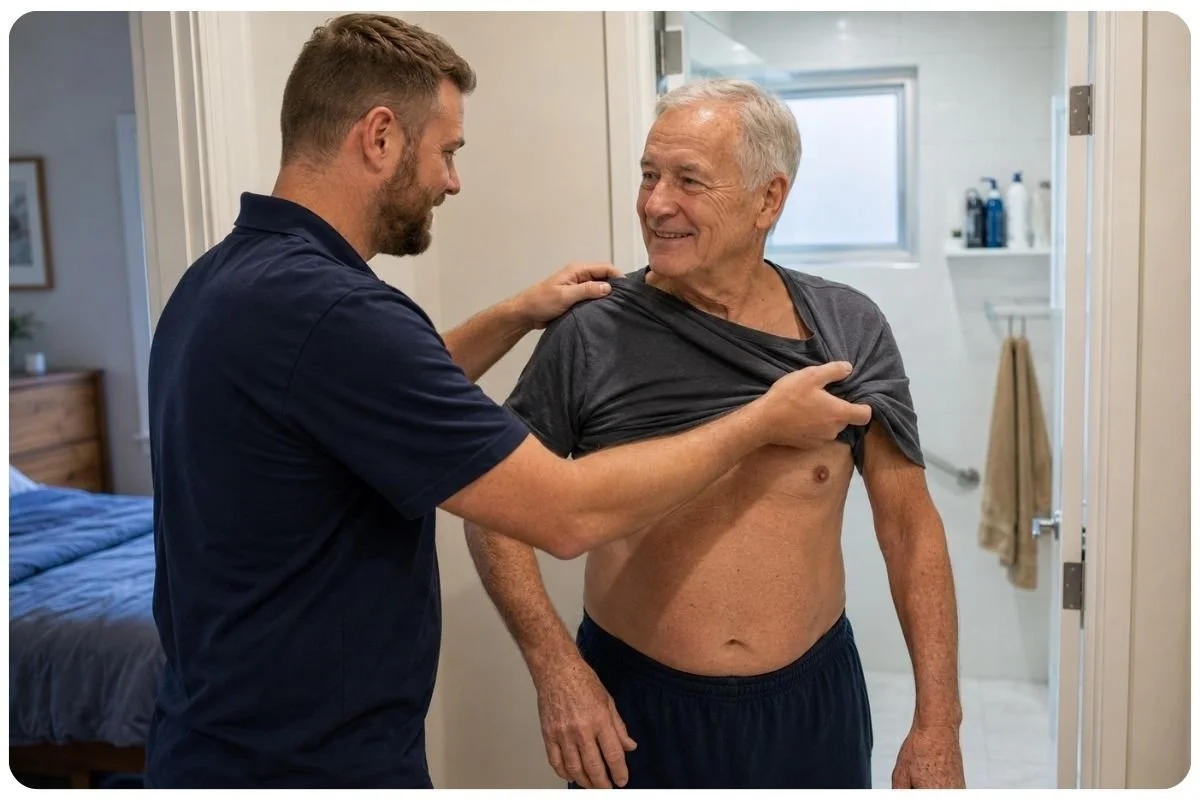
Personal care means assistance with daily activities that support your health, hygiene, safety and dignity.
Depending on your assessed needs and support plan, personal care may include help with
assistance for showering or bathing
dressing and undressing
grooming and personal hygiene
non-clinical continence management
The definition of personal care is not changing. The services themselves will still be delivered in the same way. The main change is how much participants are required to contribute towards them.
Moving personal care into the fully funded category also does not mean that it must be delivered by a nurse. Personal care workers can continue providing these services in accordance with each participant’s support plan and needs.
Will I need another assessment?
If you are already approved for personal care in your Support at Home support plan, you will not need another aged care assessment simply because of this change.
The change will apply automatically to eligible personal care services delivered from 1 October 2026. Your provider may contact you beforehand to update documents such as your care plan, individual budget or service agreement.
If personal care is not currently included in your support plan, you should speak with your provider or My Aged Care about your circumstances. The normal assessment and approval requirements will continue to apply.
What happens to services delivered before 1 October?
The new funding arrangement only applies to personal care services delivered on or after 1 October 2026.
Personal care received before this date will remain subject to the current contribution arrangements. This applies even if the provider submits the claim or issues the invoice after 1 October. Contributions already paid for personal care delivered before the change will not be refunded.
Will contributions still apply to other services?
Yes. This change only applies to approved personal care services.
Participant contributions may continue to apply to other Independence and Everyday Living services, such as domestic assistance, transport, gardening and meal preparation. The amount a person contributes depends on the service category and their individual financial circumstances.
Why is this change important?
Personal care is not an optional luxury. For many older people, it is essential for maintaining health, dignity, confidence and independence at home.
Some participants have been concerned about the cost of receiving help with very personal but necessary daily activities. Removing participant contributions should make it easier for eligible older Australians to access this support when they need it.
We are here to help
Support at Home funding and contribution arrangements can be confusing, especially when changes are introduced.
If you are a Bannister In Home Care client, our team can explain how the new personal care arrangements may affect your services, budget and statements. We can also help you review your care plan if personal care contributions have previously been a barrier.
For official information about the change visit
Australian Government Department of Health, Disability and Ageing
You may also be interested in: